Search for Bali construction rules and you will quickly meet a confident sentence: a formal moratorium is in force across six regencies, usually named as Tabanan, Jembrana, Buleleng, Bangli, Karangasem and Klungkung, while Badung and Gianyar remain open. The list gets copied between agency blogs until repetition starts doing the work of evidence.
We went looking for the source of that list in Indonesian government publications and in the Indonesian press. We could not find it. What we found instead was a different policy, with different consequences, and it is the more restrictive of the two.
What the governor actually said
In January 2025, Bali governor Wayan Koster addressed the moratorium question directly and rejected it. His words, reported by detik, were *"Tidak perlu moratorium. Yang ada pengendalian secara ketat"*, no moratorium is needed, what exists is strict control. He confirmed that permits for villas and hotels would continue to be issued, under tightened rules, and that the mechanism would be a regional regulation rather than a freeze.
A moratorium is a pause, and pauses end. Investors who read "moratorium" file the problem under timing and wait. Koster described something permanent.
Then the flooding changed the timeline
On 10 September 2025, severe flooding hit Bali and killed 17 people. The environment minister publicly connected the damage to land conversion and forest loss, noting that tree cover in some areas had fallen below four percent.
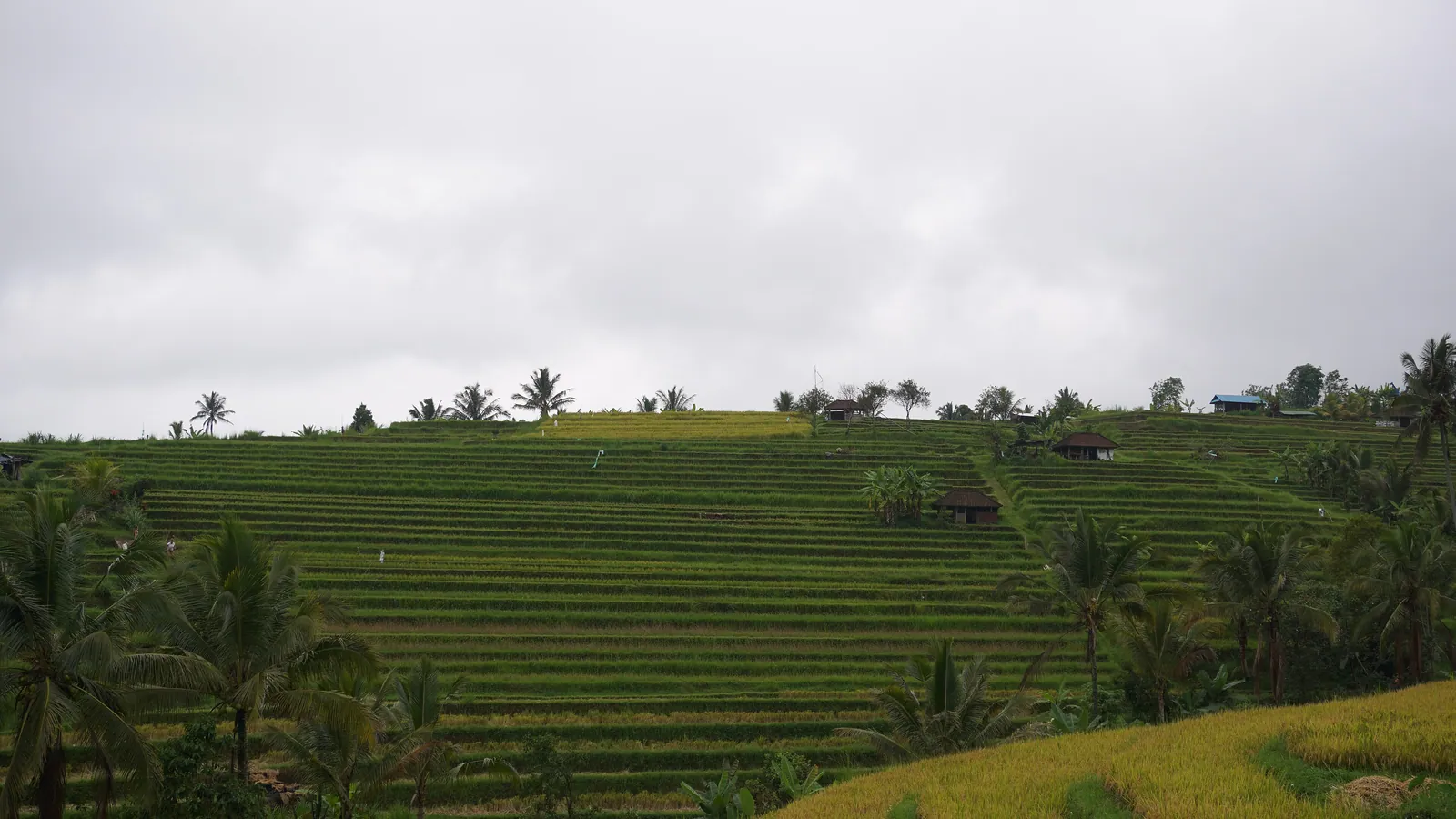
Three days later, on 13 September, Koster announced the policy that actually governs your project. Conversion of productive agricultural land, sawah, rice land above all, into commercial use is prohibited. Hotels, villas, restaurants. It applies across the province, and instructions went out to every regent and mayor. He tied it to the island's hundred-year development doctrine, which is a signal about permanence rather than about this budget year.
There is a narrow carve-out: housing for genuine personal residential use on private land is assessed case by case. Note the shape of that exception. It protects the person building a home. It does not protect the person building six rental units and calling them a family compound.
Enforcement is not theoretical
The reasonable question is whether any of this is enforced, because Indonesian property folklore is full of rules that exist on paper and nowhere else.
In October 2025, the Amankila Residence villa project in Karangasem was sealed over permit problems. A sealed site is the worst financial outcome in this business, and it is worth being precise about why. Sealing does not pause your costs. The crew still has to be paid or released and rehired. Site rental continues. Borrowed money accrues interest. Lawyers begin to bill. Meanwhile the asset produces nothing and cannot be sold in that state without a very large discount.
Why the rumour is more dangerous than the rule
Compare the two mental models.
Under the rumour, Badung and Gianyar are open, so a plot in Canggu or Ubud is fine and the only question is price. Under the actual policy, the regency your plot sits in tells you almost nothing. What matters is the classification of the specific parcel. Productive agricultural land is off-limits for commercial conversion in Badung exactly as it is in Bangli.
This is why the six-regency list is worse than merely wrong. It sends buyers to precisely the districts where land pressure is highest and where the temptation to reclassify a rice field is strongest, while telling them the coast is clear.
The check you can run yourself, today
Before you look at a single photograph, get the parcel's spatial classification. The ministry publishes an interactive RDTR viewer, and it is public. The RTRW is the provincial spatial plan; the RDTR is the detailed regency plan, and where an RDTR exists it governs down to plot level, coverage ratio, floor area, permitted height, setbacks, permitted use.
Ask any seller or agent for two things in writing: the zoning colour of the parcel and the plan reference it comes from. This request is unremarkable, costs nothing, and is answered in a sentence by anyone dealing honestly. Reluctance is itself the answer.
If the reply is that the zoning "can be changed", treat that as a claim about a formal rezoning process with an uncertain outcome and an uncertain timeline, not as a detail to be handled after signing. Price the deal as if the change never happens, because sometimes it does not.
The ecological logic, stated plainly
It is tempting to read all of this as bureaucracy, and to treat the environmental framing as decoration on a land-use fight. It is worth resisting that reading, because the causal chain here is short and physical.
Rice terraces are water infrastructure. The subak system moves and stores water and slows runoff across the island's slopes. Replace enough of that surface with roofs, driveways and pool decks and you get two effects at once: less water goes into the ground, and more water arrives downhill at speed. September 2025 was what the second effect looks like.
So the conversion ban is a government responding to a flood that killed people, using the lever it has. Reading it as a temporary irritation that lobbying will remove is a bet against the direction of travel, and the hundred-year framing suggests the province intends that bet to lose.
What this means for a purchase
Three practical positions follow.
First, stop treating regency names as a risk map. Get parcel-level classification, in writing, before money moves.
Second, treat "the zoning can be changed" as a red flag rather than a plan, and price accordingly.
Third, be honest with yourself about which side of the residential carve-out your project falls on. A home is a home. Several keyed units with a booking calendar is a commercial operation, whatever the drawings are labelled, and it is exactly the category the province has decided to stop.
None of this makes building in Bali impossible. It makes the pre-purchase week expensive in effort and cheap in money, which is the correct order for those two things.